Research behind MQS

The Meat Quality Sensor is built upon more than a decade of research into micro- and nanosensors, chemical selectivity, and food quality. This work forms the foundation of the technology that today enables objective measurement of freshness and estimated shelf life for meat and fish.

The publications below document both the scientific validity of the platform and its continuous evolution from fundamental research to applied sensor solutions.

Applied Research

Applied research through projects and collaborations that have brought MQS from the laboratory to practical application.

Go to articles

Platform Development

Where the MQS technology has been made stable, reproducible, and ready for practical use.

Go to articles

Technological Foundation

Fundamental research constituting the scientific foundation for MQS and the objective measurement of freshness.

Go to articles

Applied Research

Applied research through projects and collaborations that have brought MQS from the laboratory to practical application.

Go to articles

Platform Development

Where the MQS technology has been made stable, reproducible, and ready for practical use.

Go to articles

Technological Foundation

Fundamental research constituting the scientific foundation for MQS and the objective measurement of freshness.

Go to articles

Applied research

Applied research, where scientific results are translated into practical solutions through projects, collaborations and testing in real-world production environments.

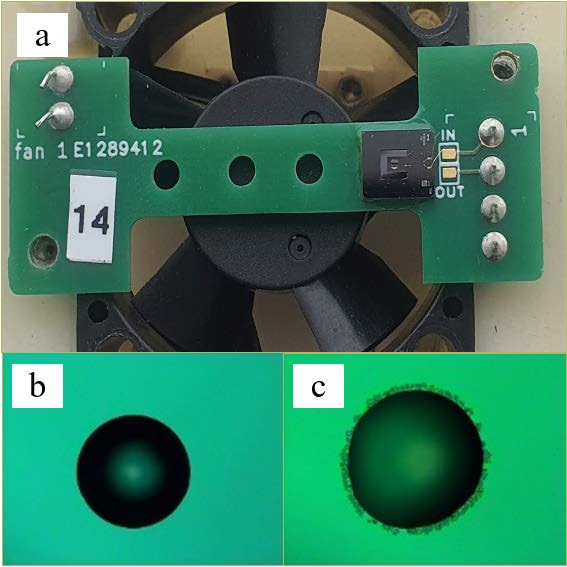
Surface treatments and functional layer placement: Enhancing repeatability of electronic nose measurements

Published January 2025

The article investigates piezoelectric-driven micro-cantilever sensors and their response to cadaverine. The study demonstrates how changes in resonance frequency can be quantified and documents the foundation for the MQS platform’s sensitive and reproducible measurement technique.

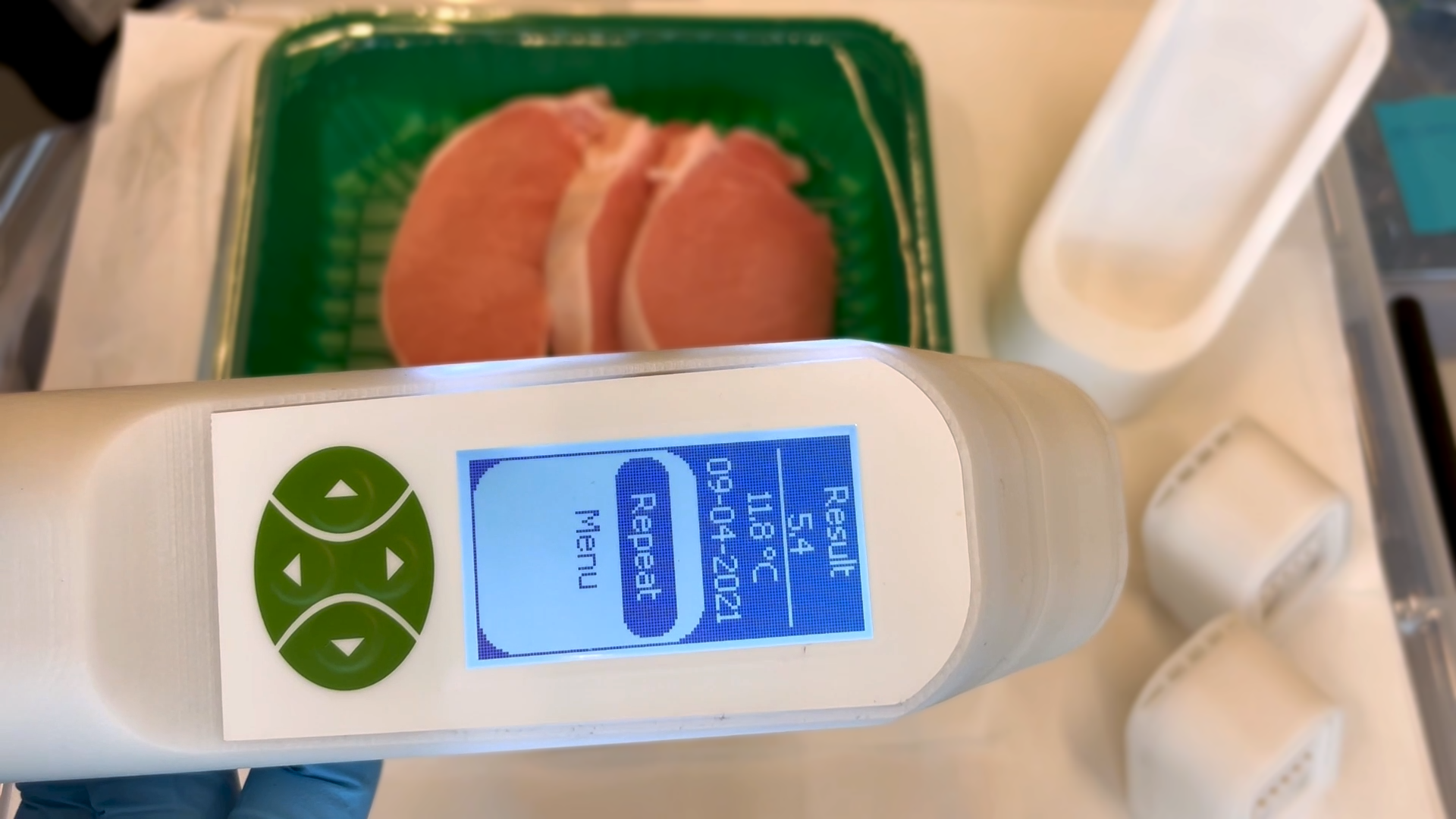
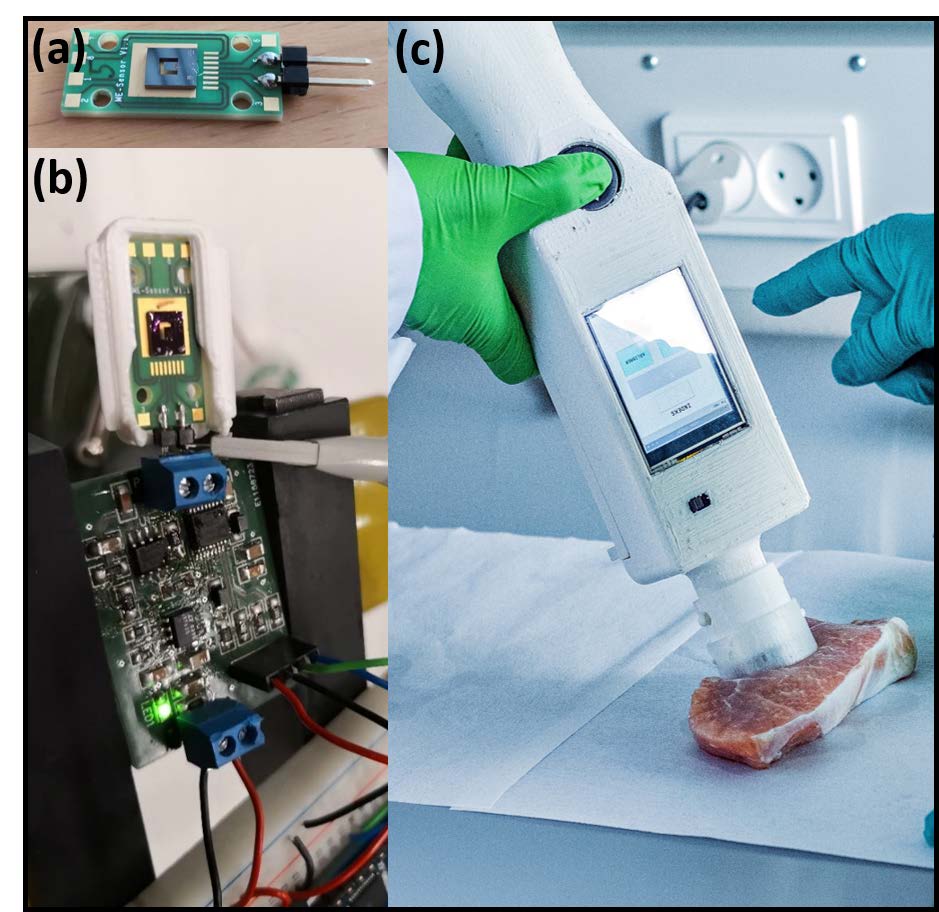
Application of a handheld electronic nose for real-time poultry freshness assessment

Published August 2024

The article demonstrates how functionalized micro-cantilever sensors can detect biogenic amines such as cadaverine by measuring small changes in resonance frequency. The study documents a precise and repeatable sensor response and contributes to the further development of the MQS platform’s objective measurement of freshness.

Novel cadaverine non-invasive biosensor technology for the prediction of shelf life of MAP pork cutlets

Published June 2022

The research shows how cadaverine, which increases as meat and fish lose freshness, can be measured objectively without laboratory equipment. By means of chemical functionalization, the sensor registers small changes in its resonance. The results form an important foundation for MQS’ calculation of freshness and expected shelf life.

Application of a handheld electronic nose for real-time poultry freshness assessment

Published August 2024

The article demonstrates how functionalized micro-cantilever sensors can detect biogenic amines such as cadaverine by measuring small changes in resonance frequency. The study documents a precise and repeatable sensor response and contributes to the further development of the MQS platform’s objective measurement of freshness.

Novel cadaverine non-invasive biosensor technology for the prediction of shelf life of MAP pork cutlets

Published June 2022

The research shows how cadaverine, which increases as meat and fish lose freshness, can be measured objectively without laboratory equipment. By means of chemical functionalization, the sensor registers small changes in its resonance. The results form an important foundation for MQS’ calculation of freshness and expected shelf life.

Platform development

Platform development with a focus on making the MQS technology stable, reproducible and ready for operation through systematic testing and optimization.

High-sensitivity biogenic amine detection via engineered binder formulation in resonant microcantilever gas sensor

Published October 2025

The article shows how our micro-cantilever sensors can register biogenic amines such as cadaverine by measuring small changes in the sensor’s vibrations. The study documents that the sensor reacts precisely and uniformly to relevant airborne substances. The results strengthen the foundation for MQS’ objective measurement of freshness.

Gas Adsorption Response of Piezoelectrically Driven Microcantilever Beam Gas Sensors

Published January 2023

The article investigates how our micro-cantilever sensors react to cadaverine. The study shows how small changes in the sensor’s vibrations can be measured and translated into precise signals. The results document the technical foundation for MQS’ stable and reproducible measurements.

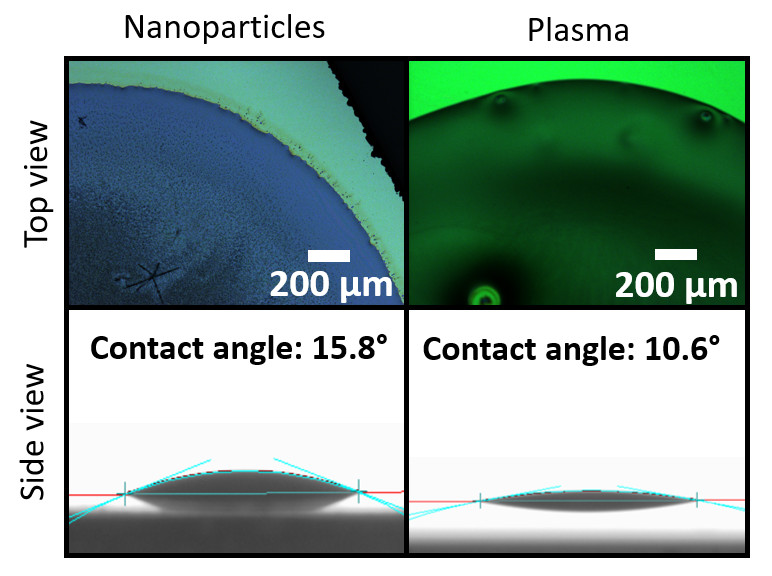
Surface Modification Enabling Reproducible Cantilever Functionalization for Industrial Gas Sensors

Published September 2021

The article shows how our micro-cantilever sensors can register biogenic amines such as cadaverine by measuring small changes in the sensor’s vibrations. The study documents that the sensor reacts precisely and uniformly to relevant airborne substances. The results strengthen the foundation for MQS’ objective measurement of freshness.

Optimizing Piezoelectric Cantilever Design for Electronic Nose Applications

Published November 2020

Forskningen viser, hvordan kadaverin, som stiger når kød og fisk mister friskhed, kan måles objektivt uden laboratorieudstyr. Ved at bruge en særlig kemisk overflade registrerer sensoren små ændringer i sin bevægelse, når kadaverin binder sig. Resultaterne danner et vigtigt fundament for MQS’ beregning af friskhed og forventet holdbarhed.

High-sensitivity biogenic amine detection via engineered binder formulation in resonant microcantilever gas sensor

Published October 2025

The article shows how our micro-cantilever sensors can register biogenic amines such as cadaverine by measuring small changes in the sensor’s vibrations. The study documents that the sensor reacts precisely and uniformly to relevant airborne substances. The results strengthen the foundation for MQS’ objective measurement of freshness.

Gas Adsorption Response of Piezoelectrically Driven Microcantilever Beam Gas Sensors

Published January 2023

The article investigates how our micro-cantilever sensors react to cadaverine. The study shows how small changes in the sensor’s vibrations can be measured and translated into precise signals. The results document the technical foundation for MQS’ stable and reproducible measurements.

Surface Modification Enabling Reproducible Cantilever Functionalization for Industrial Gas Sensors

Published September 2021

The article shows how our micro-cantilever sensors can register biogenic amines such as cadaverine by measuring small changes in the sensor’s vibrations. The study documents that the sensor reacts precisely and uniformly to relevant airborne substances. The results strengthen the foundation for MQS’ objective measurement of freshness.

Optimizing Piezoelectric Cantilever Design for Electronic Nose Applications

Published November 2020

Forskningen viser, hvordan kadaverin, som stiger når kød og fisk mister friskhed, kan måles objektivt uden laboratorieudstyr. Ved at bruge en særlig kemisk overflade registrerer sensoren små ændringer i sin bevægelse, når kadaverin binder sig. Resultaterne danner et vigtigt fundament for MQS’ beregning af friskhed og forventet holdbarhed.

Technological foundation

Technological foundation based on fundamental research in micro- and nanosensors, chemical selectivity and objective measurement of food freshness.

Potential of novel cadaverine biosensor technology to predict shelf life of chilled yellowfin tuna

Published June 2020

The study evaluates a cadaverine sensor in a realistic Danish retail scenario for tuna. The sensor’s measurements were compared with laboratory analysis, QIM and microbiological methods and showed a comparable ability to identify the transition from fresh to unacceptable quality. The results document the potential for fast and accurate estimation of freshness and remaining shelf life in fish.

Meat and fish freshness evaluation by functionalized cantilever-based biosensors

Published August 2019

The study shows how cadaverine as an indicator for loss of freshness in meat and fish can be measured objectively without the use of laboratory instruments. By means of cyclam-based chemical functionalization, cadaverine is registered via changes in the micro-cantilever’s resonance. The results form a central scientific foundation for MQS’ calculation of freshness and expected shelf life.

Micro‑cantilevers for optical sensing of biogenic amines

Published January 2017

The article investigates how micro-cantilevers can be functionalized for selective binding of cadaverine in gas phase. The study shows that functionalization conditions are of critical importance to the sensor’s sensitivity and efficiency. The results contribute to the optimization of MEMS-based sensors and form a technological foundation for the MQS platform.

Meat and fish freshness evaluation by functionalized cantilever-based biosensors

Published August 2019

The study shows how cadaverine as an indicator for loss of freshness in meat and fish can be measured objectively without the use of laboratory instruments. By means of cyclam-based chemical functionalization, cadaverine is registered via changes in the micro-cantilever’s resonance. The results form a central scientific foundation for MQS’ calculation of freshness and expected shelf life.

Micro‑cantilevers for optical sensing of biogenic amines

Published January 2017

The article investigates how micro-cantilevers can be functionalized for selective binding of cadaverine in gas phase. The study shows that functionalization conditions are of critical importance to the sensor’s sensitivity and efficiency. The results contribute to the optimization of MEMS-based sensors and form a technological foundation for the MQS platform.

AmiNIC ApS

+45 28 14 20 35

Jernbanegade 57
5500 Middelfart
Denmark

CVR: 40139265

Meat Quality Sensor

Product

Users

Benefits

Impact

AmiNIC ApS © 2023